


Fun and Productive Learning: 5 Tips for Successful Studying this School year

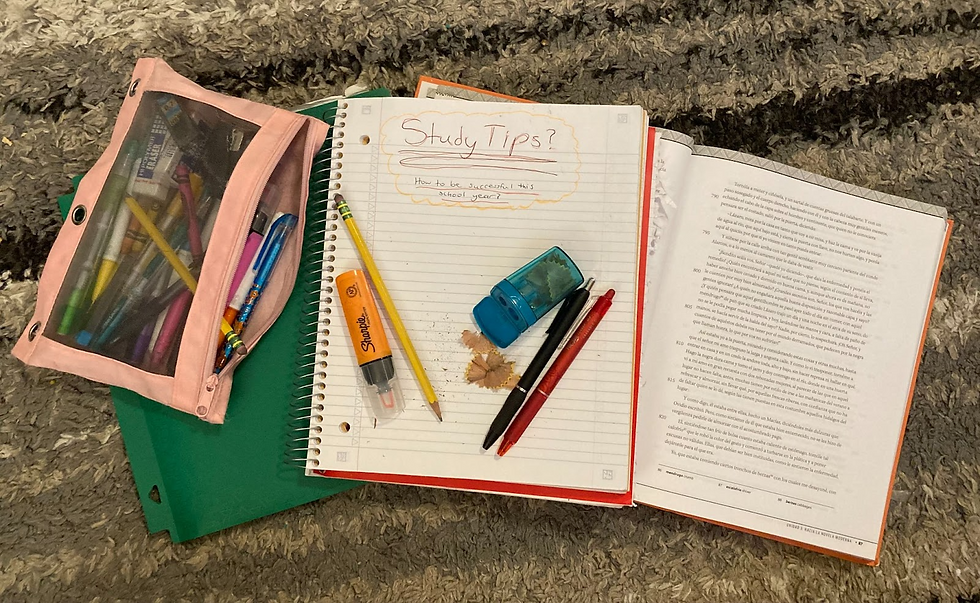
School’s officially back in session, and that means so is studying. Whether you are the kind of person who crams the night before or studies for weeks in advance, it is something we all have to deal with, but, what if we didn’t have to just “deal” with it? What if we could look forward to studying? It can be difficult to stay motivated to study on top of all the other things we already have on our plates, but in many ways, it truly is the quality of your studying that matters more than the quantity of your studying. If you can make the most of your study time rather than just making the most study time, you will find it can be very efficient.
1. Study in Intervals
A lot of times, when people study, they try to do it for multiple hours straight, not realizing that this method could be counterintuitive to their goals. Whether you are using a method such as flashcards, reading, practice problems, etc., if you are studying for too long, you will lose focus, and that will inevitably just lead to you being unproductive.
“One source explains that children and teens can actively focus for three to five minutes for every year of their age,” YourTeen Magazine said. “So, a 13-year-old can pay attention for 39-65 minutes. So, if you’re wondering ‘what is the attention span of a 16-year-old,’ the answer would be between 48 and 80 minutes.”
Teens in general have a harder time staying focused simply because of their age, but with technology on top of that, it has added a whole other barrier when it comes to staying focused.
Expanding our attention span is a topic for another article, but for now, we can talk about how to react to our shorter attention spans.
If you’ve ever heard of the Pomodoro timer, you can try using a similar method to that. Attempt seeing how long it takes you to go without your phone and work at a productive pace. For instance, if that is 5 minutes, then set your timer for 5 minutes of work time, and then half your work time for your break time, which in this case, would be 2.5 minutes. By doing this, you will maximize your work time so you’re not rereading the same page over and over again—like I do. Instead, you will efficiently get your work done, leaving more free time in the evening.
2. “Teach” the Concepts to Others
This next method is a great way to connect with friends if you thrive more by working together with other people. While some people need a quiet setting to concentrate by working alone, others need a more social setting to concentrate.
If you know you tend to be most productive in a classroom setting around others, you might want to consider this next tip. When it comes to this fun method of studying, you can create group chats or even plan study sessions with some of your close friends to focus on a particular class, whether that is to prepare for a big test or just to get work done. Either way, by gathering together, you can ensure your knowledge of a certain concept by explaining it to each other in a way that is easy to understand.
Sometimes people don’t retain the most from lectures, but if, for instance, you have a big test that has 4-5 subunits, you can give one subunit to each person to study really well. Then, when you guys hang out together, you can listen to each other and learn from each other while teaching others. It limits the amount of work for any one person, and allows for everyone to learn the concept in a less overwhelming, digestible way.
3. Build a Good Playlist
Another way to make your study session a productive session is by listening to music. In fact, listening to music can become a pick-me-up session, too. With the right playlist, you might feel more energized by the end of your study time rather than drained. So it is really about the environment you create. In fact, it is scientifically proven that listening to music can help productivity while studying and doing homework. There is even an article from the University of Maryland Global Campus that covered it.
“Music-based activities in early childhood education have proven to support self-regulation, cognitive and intellectual development, literacy, and language,” Theresa Schempp, writer/editor of the UMGC blog explained. “No matter their age, students can continue to benefit from music to help their academic performance.”
Now, this tip isn’t for everyone. For some people, studying with music can be a big distraction, because it is often used for singing and dancing. However, that is why creating a special playlist for your study music, such as more mellow options like instrumental music with no lyrics, can be very helpful in allowing you to concentrate while still enjoying your time while studying.
4. Change Up Your Setting
This tip is one that applies to anyone but could simultaneously go hand in hand with the group studying tip. It is important to set aside some space in your house that you go to study every day, just so that you can get your brain into the habit of knowing it is a study spot, though that doesn’t mean you can’t have multiple special study spots.
When it comes to teaching your brain what is “play time” and “work time,” it really comes down to what you are doing with your time in whatever area you are in. you teach yourself to be productive in certain spots of your house, it doesn’t really matter where those spots are, but rather what you are doing. So, by setting up different study spots to go to, it makes studying a lot more engaging and exciting. For instance, if you want to, you can set up a schedule of going to the library, coffee shop, and park, and rotate those locations by going to one once every week.
5. Try a Reward System
Last but not least, it would not hurt to add a reward system to your study plan. However, a reward system doesn’t have to be something expensive you get every day. Instead, it can be little mini things you let yourself have every day, or one “big” thing you get for yourself for having good study time at the end of each week.
For example, you could get a big bag of candy from a store like Target, and then at the end of every night during the week, you can let yourself have a candy or two to reward yourself after a day of hard work.
Another option is saving up that money for one bigger thing every week. For instance,
on Fridays you could go and get a special sweet treat from an ice cream shop, or even spend some time watching a movie to unwind after the week. Regardless of your preference, a reward system, big or small, can be motivating, and make us want to get our tasks done, knowing that there is that light at the end of the tunnel.
Studying truly doesn’t have to be something stressful. In fact, if anything, it should be seen as something calming and even enjoyable, something that you can look forward to rather than dread. Life is all about how we react to what we are given. School doesn’t have to be thought of as something that you have to do, but rather something that you want to do. You can make the most out of the year by taking advice, whether from this article or somewhere else, to help turn even the most seemingly insignificant parts of your school year into some of the best parts of your day.


Comments